 (Image via
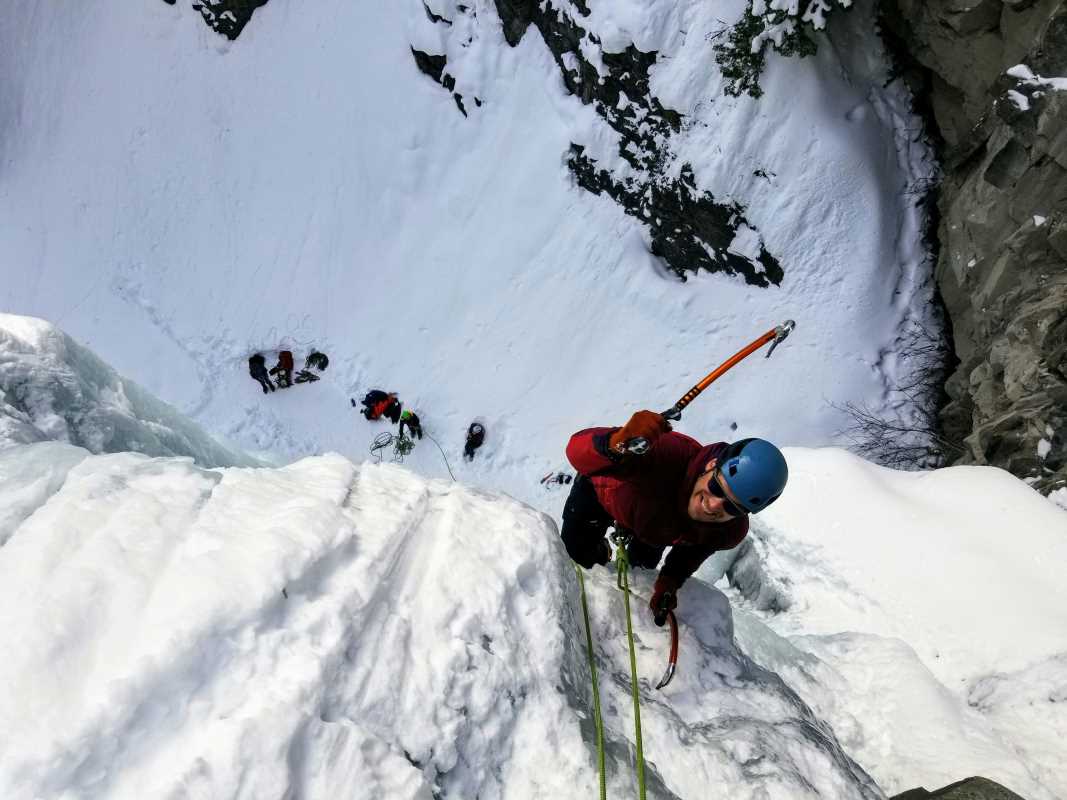
Scaling a frozen waterfall is an elemental battle against gravity and cold, requiring a unique blend of physical strength, mental fortitude, and specialized equipment. Unlike rock climbing, where you often rely on the natural features of the stone for handholds and footholds, ice climbing demands that you create your own points of contact with every move. The medium is constantly changing, shifting from brittle, dinner-plate ice to soft, plastic névé, making your reliance on gear absolute. Trusting your tools allows you to focus on your movement and the breathtaking environment around you.
Having the right equipment transforms a daunting vertical ascent into a manageable and thrilling puzzle. The gear you carry is your lifeline, providing the security and leverage needed to ascend sheer faces of ice. Whether you are a beginner taking your first swing or an experienced alpinist looking to upgrade your kit, understanding the nuances of your tools is essential for safety and efficiency. This guide explores five critical pieces of gear that every ice climber needs to tackle the frozen vertical world with confidence and precision.
Technical Ice Tools for Vertical Terrain
The modern technical ice tool is an extension of the climber's arm, designed specifically to penetrate and hold in vertical ice. Unlike a traditional mountaineering axe, which has a straight shaft for walking support, technical tools feature a curved shaft that provides clearance over ice bulges and protects your knuckles from smashing into the wall. The pick is aggressively angled to hook into the ice securely with a natural swing. High-quality tools often come with modular heads, allowing you to replace worn picks or swap between hammer and adze attachments depending on the route's requirements.
Choosing the right ice tool depends largely on the type of climbing you intend to do. For pure waterfall ice, a tool with a balanced swing weight and a comfortable grip is paramount. Many modern tools are designed to be used without leashes, featuring ergonomic handles with rests that reduce grip fatigue during long pitches. This "leashless" style offers greater freedom of movement, making it easier to place screws or shake out pumped forearms. When selecting a tool, consider the pick geometry; thinner picks displace less ice, which is crucial when climbing on brittle or delicate structures.
Modular Crampons for Precision Footwork
Your connection to the ice begins at your feet, making crampons arguably the most important piece of gear for stability. For vertical ice climbing, you need technical crampons with aggressive front points designed to penetrate hard ice. Unlike general mountaineering crampons that have horizontal front points for snow traction, technical models usually feature vertically oriented front points that slice into the ice like a pick axe. This design minimizes ice fracturing and provides a solid platform for standing on even the tiniest placements.
The debate between mono-point and dual-point crampons is a common one among climbers. Dual-point configurations offer more stability and surface area, making them an excellent choice for beginners or for climbing softer, slushier ice. Mono-points, however, offer superior precision. A single front point can be slotted into pockets, cracks, or old tool holes, allowing for intricate footwork on mixed terrain where rock and ice meet. Look for a modular system that allows you to switch between these configurations, giving you the versatility to adapt your gear to the specific conditions of the day.
Ice Screws for Reliable Protection
On a frozen waterfall, ice screws are your primary means of protection against a fall. These hollow, threaded tubes are screwed into the ice to create an anchor point for your rope. Modern ice screws are marvels of engineering, featuring razor-sharp teeth that bite into the ice instantly and highly polished interiors that reduce friction. The most significant advancement in recent years is the addition of a folding crank handle. This feature allows you to drive the screw in rapidly with one hand, a critical advantage when you are hanging on by just one tool and your strength is fading.
Building a rack of ice screws requires a mix of lengths to accommodate different ice thicknesses. Shorter screws are useful for thin ice sections, while longer ones provide deep, secure anchors for belay stations. When placing a screw, the angle is vital; it should be placed roughly perpendicular to the ice surface or slightly angled downward to maximize holding power. Color-coding on the crank knobs or hangers helps you quickly identify the right length on your harness. Keeping your screws sharp and protecting the threads with caps or a specialized case is essential for ensuring they perform when you need them most.
Stiff Mountaineering Boots for Support
The foundation of your entire climbing system lies in a pair of stiff, supportive mountaineering boots. Unlike hiking boots, which flex to allow for a natural walking gait, ice climbing boots must have a rigid sole (often referred to as a full shank). This stiffness creates a solid platform that prevents your calves from burning out while standing on your front points for hours. Without this rigidity, the crampon would flex and potentially pop off the boot, leading to a dangerous situation.
Beyond stiffness, insulation is the key factor in choosing a boot. Ice climbing involves long periods of inactivity while belaying, standing in freezing temperatures on cold ice. Single boots are lighter and more precise, ideal for technical mixed climbing or warmer days. Double boots, which feature a removable inner liner, offer superior warmth and are easier to dry out overnight on multi-day trips. Ensure your boots have a dedicated welt at the toe and heel to securely accommodate step-in crampons, creating a seamless interface between your foot and the ice.
Climbing Helmet for Impact Protection
In the vertical world of ice climbing, a helmet is not just a precaution against falling; it is a mandatory shield against falling debris. As you or your partner swing tools into the ice, shards and chunks, sometimes as large as dinner plates, can break loose and tumble downward. A climbing helmet protects your head from this constant barrage of ice, as well as from rockfall if you are climbing in mixed terrain. Modern helmets are constructed from expanded foam (EPP or EPS) covered by a polycarbonate shell, offering a blend of lightweight comfort and robust durability.
When selecting a helmet specifically for ice climbing, look for one that provides ample coverage on the sides and back of the head, not just the top. Ventilation is important to prevent overheating on the approach, but you don't want vents so large that small chunks of ice can slip through. A good fit is essential; the helmet should stay securely in place even when you look up or down. Additionally, ensure the helmet has reliable clips for securing a headlamp, as winter days are short, and you will likely find yourself climbing or descending in the dark at some point during your adventure.