 (Image via
Winter in Canada is an unforgiving beast. From the damp cold of the Maritimes to the deep freeze of the Prairies and the treacherous peaks of the Rockies, the environment demands respect. Surviving—and thriving—in these conditions requires more than just a warm coat and a positive attitude. It necessitates a system of specialized gear, advanced knowledge, and precise preparation.
This guide moves past the basic advice of "layering up" to explore high-performance tools and strategies used by seasoned winter professionals. Whether you are planning a backcountry ski traverse, a winter camping expedition, or simply want to be prepared for emergency scenarios on remote highways, these insights will elevate your winter readiness.
The Science of Advanced Layering
Effective winter clothing is not about bulk; it is about moisture management and thermal regulation. In extreme cold, sweat is your enemy. If your base layer gets wet and you stop moving, hypothermia can set in rapidly. The goal is to move moisture away from the skin while trapping heat.
Next-to-Skin Performance
Cotton kills in winter. Instead, rely on Merino wool or advanced synthetics. Merino wool, like the Smartwool Intraknit series, offers superior temperature regulation and odor resistance. For high-output activities where sweat is inevitable, a synthetic base layer like the Patagonia Capilene Air provides exceptional wicking capabilities and dries much faster than wool.
The Mid-Layer Strategy
The mid-layer is your insulation engine. Down is the gold standard for warmth-to-weight ratio, but it loses its insulating properties when wet. For Canadian winters, where conditions can shift from snow to freezing rain, hydrophobic down or synthetic insulation is often a safer bet. The Arc’teryx Atom Heavyweight Hoody uses Coreloft synthetic insulation that retains warmth even when damp, making it a reliable workhorse for variable conditions.
The Fortress Shell
Your outer shell must be a fortress against wind and precipitation while allowing internal moisture to escape. Look for a 3-layer GORE-TEX Pro jacket. The Mammut Nordwand Pro is designed for extreme alpine conditions, offering robust protection and durability. Crucially, ensure your shell has "pit zips" for rapid venting during intense exertion.
Precision Shelter and Sleep Systems
When the sun sets and temperatures plummet to -30°C (-22°F) or lower, your shelter system is your lifeline. A standard three-season tent will likely fail under the weight of heavy snow or succumb to high winds.
Four-Season Architecture
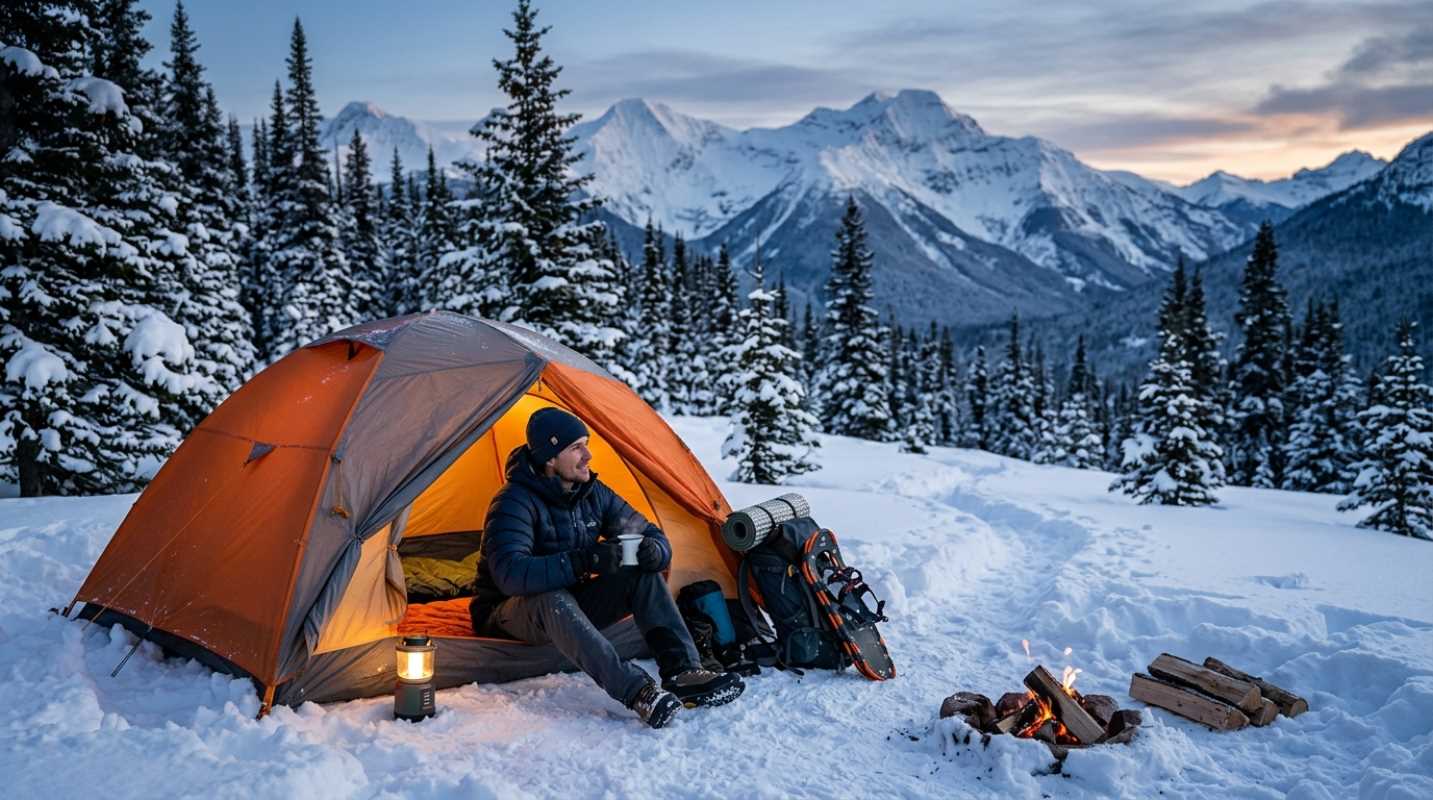
Winter tents are engineered to withstand heavy snow loads and fierce winds. They feature stronger poles and steeper walls. The Hilleberg Nammatj 2 GT is legendary in this category. Its Kerlon 1800 outer tent fabric is incredibly strong, and its tunnel design sheds snow efficiently while providing a large vestibule for gear storage and cooking—a critical feature when it’s too stormy to cook outside.
Ground Insulation is Critical
You can have the warmest sleeping bag on earth, but if you sleep directly on the snow, you will freeze. Conductive heat loss to the ground saps energy faster than the air does. You need a sleeping pad with a high R-value (thermal resistance).
Stacking pads is an expert technique. Start with a closed-cell foam pad like the Therm-a-Rest Z Lite SOL on the bottom for durability and protection. Top it with an inflatable, high R-value pad like the Therm-a-Rest NeoAir XTherm NXT, which boasts an R-value of 7.3. This combination creates a thermal barrier that isolates you completely from the frozen ground.
Winter Navigation and Communication
Navigating in winter presents unique challenges. deeply buried trails disappear, and whiteout conditions can eliminate visual landmarks entirely. Reliance on a single method of navigation is dangerous.
Cold-Weather Electronics
Batteries drain rapidly in the cold. Lithium batteries perform significantly better than alkaline in low temperatures. For navigation, a GPS device with physical buttons is superior to a touchscreen, which can be difficult to operate with heavy gloves. The Garmin GPSMAP 67i is a top choice, featuring multi-band GNSS for accuracy in deep canyons and inReach satellite technology for two-way communication and SOS capabilities.
Keep your electronics warm. Store your GPS and phone in an internal pocket close to your body heat. Use a "cold soak" bag—an insulated pouch like the Phoozy XP3—to add an extra layer of thermal protection for your devices.
Analog Backup
Technology can fail. Always carry a physical topographic map and a reliable compass. In winter, terrain features like frozen lakes and rivers become travel corridors. Ensure your map is waterproof or stored in a durable case like the Sea to Summit TPU Guide Map Case. Learn to navigate by terrain association, using the shape of the land to determine your location when trails are obscured.
High-Calorie Winter Nutrition
In extreme cold, your body burns calories at an accelerated rate just to maintain its core temperature. You might need 4,000 to 6,000 calories per day. This is not the time for diet food; you need fat and fuel.
Melting Snow Efficiently
Water is heavy to carry but abundant in the form of snow. However, melting snow requires a massive amount of fuel. Canister stoves often fail in extreme cold because the pressure drops as the gas cools.
Liquid fuel stoves are the standard for winter expeditions. The MSR XGK EX is the undisputed king of cold-weather stoves. It runs on white gas, kerosene, or even diesel, and performs reliably at any altitude or temperature. Pair it with a heat exchanger on your pot to increase efficiency and save fuel.
Caloric Density
Focus on foods that don't freeze into breaks-your-teeth bricks. Chocolate, cheese, and salami are staples, but high-fat nut butters are even better. Trail Butter packets are excellent because you can knead them to soften the contents before eating. Add a generous knob of butter or coconut oil to your evening meals to boost caloric intake and generate body heat while you sleep.
Emergency Tools and Fire Starting
When things go wrong in the winter, the margin for error is razor-thin. Being able to start a fire quickly can save your life.
The Fire Starting Triad
Do not rely on a standard lighter; butane fails in the cold. Carry three ignition sources:
- Stormproof Matches: UCO Titan Stormproof Matches burn aggressively for 25 seconds, even in wind and rain, and will re-light if submerged in water.
- Ferrocerium Rod: A high-quality ferro rod, like the Exotac nanoSTRIKER XL, throws sparks at 3,000°C (5,432°F) and works when wet.
- Bellows: A collapsible pocket bellows, such as the Epiphany Outdoor Gear V3 Pocket Bellows, allows you to deliver oxygen directly to the heart of your fire without getting your face in the snow.
The Snow Shovel
A shovel is not just for avalanche safety; it is a critical survival tool. You can use it to dig a snow trench shelter, build a wind wall for your tent, or melt snow for water. The Black Diamond Evac 7 moves snow efficiently and can convert into hoe mode for rapid digging. Never venture into deep snow backcountry without one.
Specialized Traction
Slips and falls on ice can end a trip instantly. While crampons are necessary for mountaineering, microspikes are essential for general winter travel. Kahtoola MICROspikes offer aggressive traction on packed snow and ice, fitting securely over winter boots. They are far superior to "yak tracks" or other light-duty options that break easily under stress.