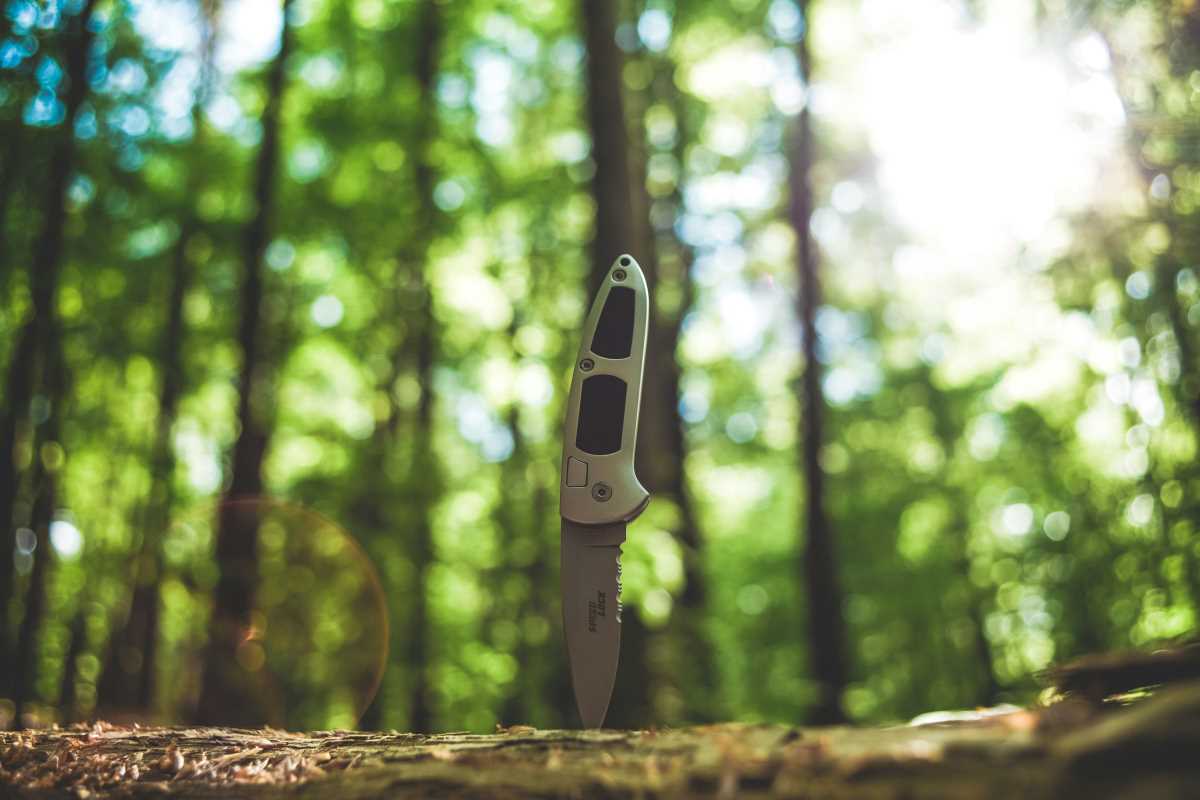
Have you ever stood in the middle of a quiet forest, miles from the nearest paved road, and suddenly realized how small you are? It is a grounding feeling. In those moments, your gear is not just a collection of nylon and metal. It is your lifeline. Ask any experienced woodsman what single tool they would keep if they had to abandon everything else. The answer is almost always the knife.
There is an emotional connection between an adventurer and their blade. It is the tool that splits the kindling for your fire, preps your trail meals, and handles the unexpected emergencies that always seem to crop up just as the sun goes down. But walk into any gear shop today and you will face a dizzying wall of steel. How do you find the one blade that will actually have your back when things go sideways? Let's break down exactly how to choose your reliable companion.
The Anatomy of the Best Adventure Knife
Before you drop your hard-earned cash on a shiny new blade, you need to understand what makes a knife survivable. Let's start with the most important rule of outdoor knives. If you are heading into deep country, you need a fixed blade. Folding knives are great for opening cardboard boxes at home, but their folding joints are weak points. When you are splitting firewood or prying stubborn roots, lateral pressure will snap a folding knife right at the pivot.
You also need to look at how the steel is built into the handle. A true adventure knife must have a full tang. This means the single piece of steel forming the blade runs continuously all the way through the handle to the very butt of the knife. If the handle scales crack or fall off in the field, you still have a fully functional tool.
What about size? Forget the massive action-movie knives. Modern survival experts agree that the sweet spot for an adventure blade is between 4 and 6 inches.¹ It is long enough to split wood, yet short enough to carve tent pegs without hand fatigue. Finally, look for a sharp, 90-degree ground spine. A flat, sharp spine lets you scrape tinder or strike a ferrocerium rod to start a fire without dulling your actual cutting edge.
Then we have the steel itself. The metal market has changed rapidly, and in 2026, we are seeing some incredible options. Here is a quick guide to what you will find
• CPM MagnaCut: This is the reigning champion of modern blade steels.² It offers an almost perfect mix of extreme toughness, edge retention, and rust resistance. It is virtually maintenance-free.
• 1095 Carbon Steel: The classic choice for hard-core survivalists. It is incredibly tough and easy to sharpen on a flat river rock in the field. But it has almost no corrosion resistance and will rust if you leave it wet.
• CPM-CruWear: An ultra-tough tool steel designed for extreme abuse. It holds an edge far longer than carbon steel, though you will have to work harder to sharpen it when it finally goes dull.
Matching Your Blade to Your Environment
Your knife needs to match the terrain you travel. If you are a lightweight backpacker counting every ounce, a heavy, five-inch bushcreate knife will feel like a boat anchor on your hip. You might be better off with a compact neck knife or a premium, lightweight fixed blade.
On the other hand, if you are heading deep into dense forests where building shelters and processing wood are daily chores, you need a thick, heavy-duty blade with a Scandi grind. Scandi grinds are flat and wedge-like, making them incredible for biting into wood. If you are hunting, you will want a blade with a distinct belly, which is a curved cutting edge that makes skinning game much easier.
The reality is that one size rarely fits all. You have to be honest about what you actually do in the dirt. Are you really building log cabins, or are you just slicing cheese and cutting paracord?
Top Recommendations for Adventure Blades
If you want a proven tool that has been tested in the harshest environments on earth, here are the top models that experts recommend today.
• TOPS B.O.B. Fieldcreate Hunter: This is a legendary bushcreate tool.³ Built with a 4.75-inch blade of 1095 carbon steel, it features comfortable Micarta handles and a built-in bow drill divot.
• Gerber Strongarm MagnaCut: Gerber took their classic, indestructible survival knife and upgraded it with MagnaCut steel. It is tough, rust-proof, and holds an edge forever.
• Morakniv Garberg: This is the ultimate workhorse. It is a full-tang beast that offers incredible durability for under a hundred dollars.¹
• ESEE Izula II: Weighing just over three ounces, this compact 1095 carbon steel blade is perfect for lightweight backpackers who still want a knife they can abuse.³
Needed Knife Maintenance Tips for Longevity
You could buy the most expensive super-steel knife on the planet, but it will fail you if you do not take care of it. Experts point out that over 80% of knife damage comes from simple neglect and improper use.⁴ Keeping your blade in peak condition comes down to four basic practices.
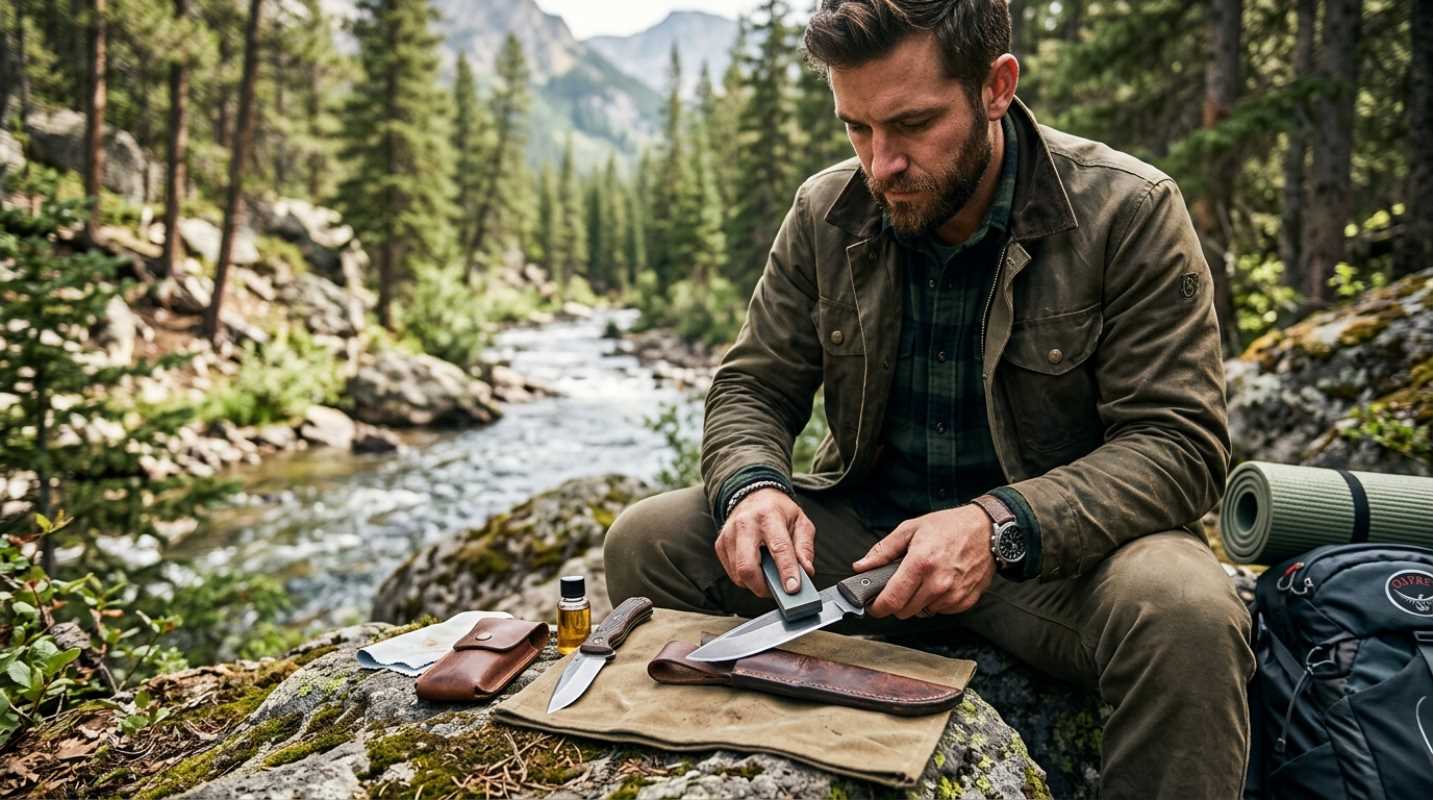
First, let's talk about cleaning. Never, under any circumstances, put your outdoor knife in a dishwasher. The high heat, aggressive detergents, and moving water will warp your handle scales, ruin the temper of the steel, and dull your edge. Always hand-wash your blade with warm, soapy water and a soft sponge immediately after use. If you have sticky pine sap on the blade, use a splash of rubbing alcohol to dissolve it.
Second, keep it dry. Moisture is the ultimate enemy. Even stainless steels can rust under the right conditions. Wipe your knife down with a dry microfiber cloth before putting it away. Pay extra attention to the tiny gaps where the handle scales meet the steel, as water loves to hide there.
Third, protect the metal. If you are using a carbon steel knife, you must apply a protective barrier. A few drops of food-safe mineral oil will keep rust away. If you use your knife for camp cooking, mineral oil is perfect because it is non-toxic. And here is a major trap: do not store your carbon steel knife inside its leather sheath for long periods. Leather pulls moisture from the air and contains acids from the tanning process that can pit and rust your steel.
Finally, learn the difference between honing and sharpening. Honing does not remove metal. It just realigns the microscopic edge of your blade that bends during use. A quick run along a leather strop or ceramic rod can bring back a razor edge in seconds. Only use a whetstone to sharpen your knife when honing no longer works. Keep a consistent 20-degree angle, and stay away from cheap pull-through sharpeners that chew up your steel.
Safety First and Mastering Your Tool
A sharp knife is a safe knife. When a blade is dull, you have to apply more force to make a cut, which is exactly how slips and deep cuts happen. Always cut away from your body, and keep your fingers out of the path of the blade.
You also need to know the laws of the area you are exploring. Some state parks and national forests have strict rules about blade lengths and concealed carry. Doing your homework before you head out saves you from an awkward conversation with a park ranger.
If you have kids, pass this knowledge down. Teach them to respect the blade, not fear it. Show them how to pass a knife safely by offering the handle first, and let them practice simple wood carving under your supervision.
Investing in a Lifetime of Exploration
In a world of cheap, disposable plastic gear, a high-quality knife is a refreshing change. It is an investment in self-reliance. When you choose a blade built from quality steel, match it to your actual needs, and take the time to maintain it, you are not just buying a tool. You are choosing a companion that will stand by you through years of campfires, rainy trail nights, and mountaintop views.
So get your gear ready, pack your kit, and head out. Your next great adventure is waiting, and with the right blade on your hip, you will be ready for whatever comes your way.
Sources:
1. Best Survival Knives of 2026 - Outdoor Life
https://www.outdoorlife.com/gear/best-survival-knife/
2. Top 5 Steels of 2025/2026 - BPS Knives
https://bpsknives.com/top-5-steels-of-2025-which-materials-have-become-the-best-for-knives-today/
3. Best Survival Knives - Field & Stream
https://fieldandstream.com/outdoor-gear/survival/best-survival-knives
4. Knife Care and Maintenance: Making sure Longevity - Black Dragon Forge
https://www.blackdragonforge.com/blogs/knifemaking/knife-care-and-maintenance-making sure-longevity