Have you ever found yourself in the middle of a sudden mountain downpour, watching your carefully pitched tarp sag into a useless, water-collecting bowl? Or maybe you have looked up at a steep rock face and wondered if the thin line connecting you to safety is actually up to the task.
In the outdoors, your cordage is often the only thing standing between a successful adventure and a miserable, or even dangerous, situation.
But walking into an outdoor store can be a lot of because there are hundreds of options on the wall.
To make the right choice, you first need to understand the difference between static and dynamic rope.
Think of dynamic rope like a high-tech bungee cord designed to stretch and absorb impact.
Static rope, on the other hand, is like a steel cable with almost no stretch, perfect for holding things tightly in place.
Choosing the right tool for the job is not just about convenience, it is a matter of safety.
Climbing and Utility Rope for Safety
When you are hanging off a cliff, your rope is literally your lifeline.
For lead climbing, you must always use a dynamic rope because it stretches to absorb the massive forces of a fall.
Using a static rope or utility cord for lead climbing is incredibly dangerous and can cause gear to rip out of the rock or cause severe bodily injury.
So what does this actually mean for you?
In 2026, you should look for specific certifications on the packaging, specifically the EN 892 European standard or the UIAA 101 certification from the International Climbing and Mountaineering Federation.¹
The UIAA standard is particularly tough, requiring single ropes to survive at least five severe test falls with an 80-kilogram weight without breaking.²
It also measures impact force, which is the amount of shock transmitted to your body during a fall, and forces must stay under 12 kilonewtons.²
Static ropes, which do not stretch, are reserved for tasks like rappelling, hauling heavy gear, or building anchors.
For climbing, you will encounter single ropes, which you use on their own, half ropes, which you use in pairs by alternating clips, and twin ropes, where both strands clip into every piece of gear.
Needed Cordage for Camping
Once your feet are back on flat ground, your cordage needs change completely.
For camping and bushcreate, you want static, low-stretch cordage that can handle a variety of utility tasks.
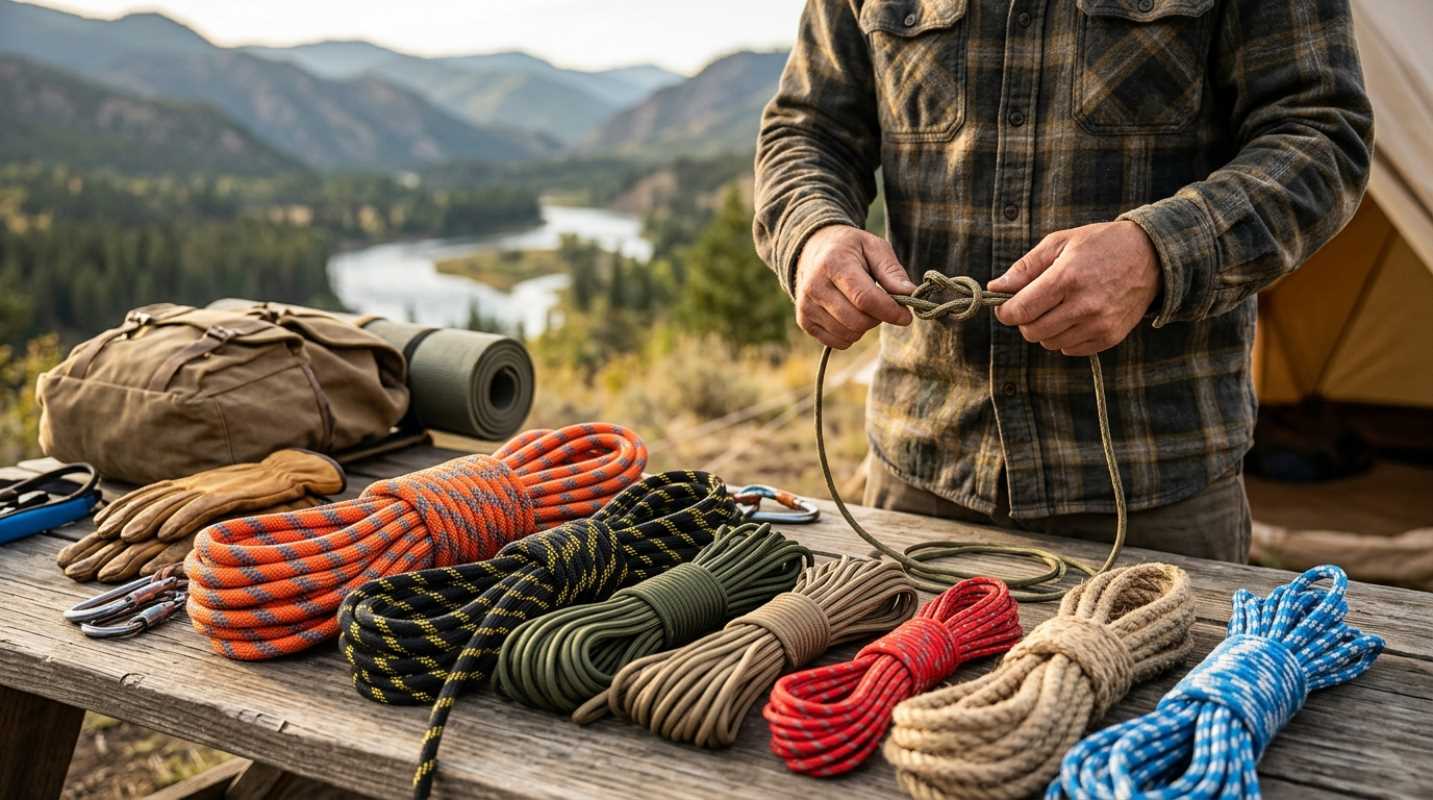
The undisputed king of the campsite is Type III 550 Paracord.
What makes paracord so special is its clever construction.
It features a tough nylon outer sheath protecting seven to nine inner nylon strands.
If you run out of fishing line, thread, or need emergency tinder, you can simply gut the cord and use those inner strands.
Of course, synthetic ropes like nylon and polyester are not your only choices.
Natural fibers like jute or sisal are great for bushcreate because they are biodegradable and make excellent fire tinder, though they rot quickly if left wet.
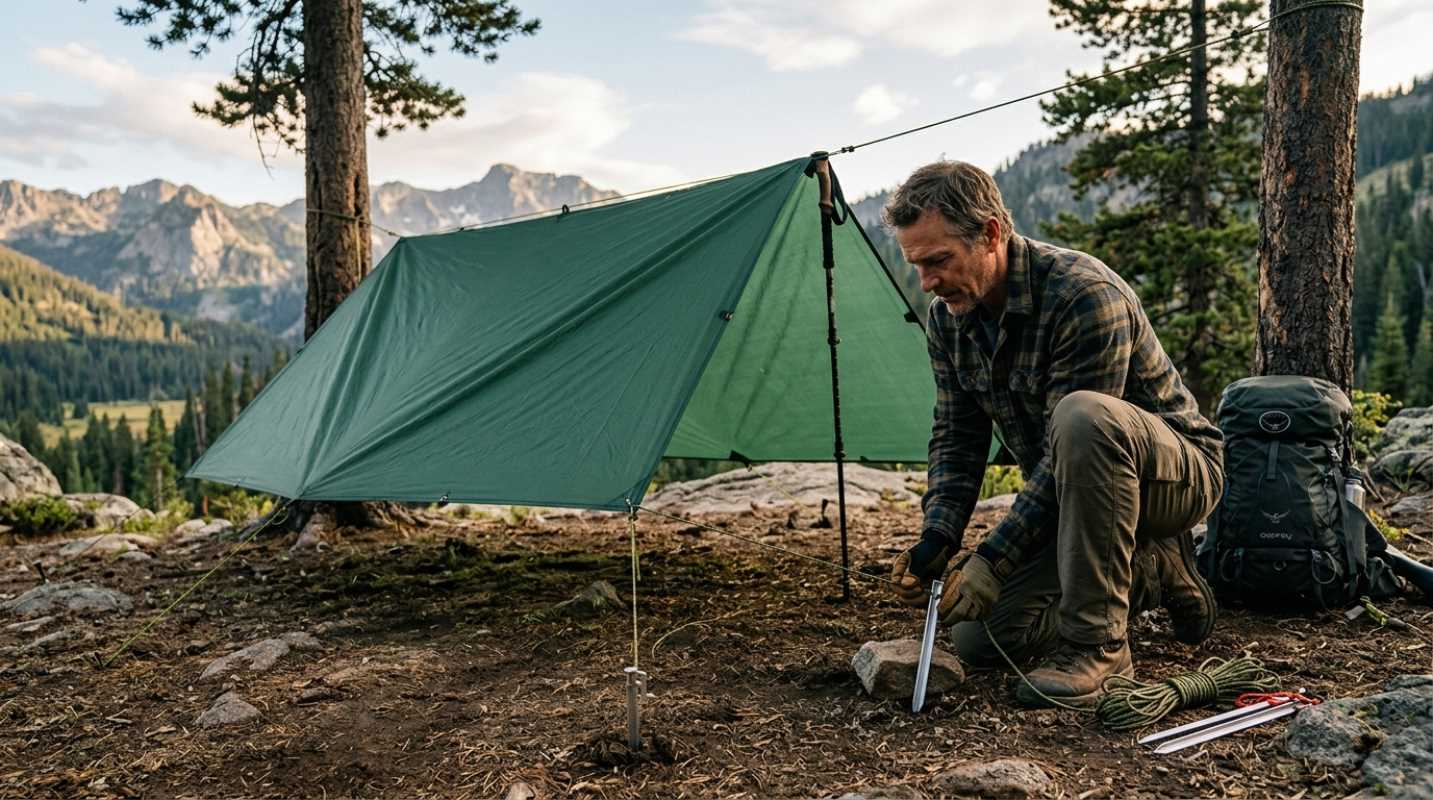
When you are setting up guy lines for your tent, you want thin, reflective cords that hold their tension overnight so your shelter does not sag in the wind.
Specialized Materials
To get the most out of your gear, you need to understand what these ropes are actually made of.
Let's look at the big three materials dominating the outdoor world today.
First, there is nylon, which is strong and has great elasticity, making it perfect for absorbing shocks.
But nylon has a major weakness: it loves water.
When nylon gets wet, it loses strength, gets heavy, and can freeze solid in cold weather.
Polyester is the opposite, as it resists water, shrugs off UV damage from the sun, and barely stretches at all, making it the perfect choice for permanent outdoor rigging.
Then we have Dyneema, also known as UHMWPE.
Dyneema has created a massive strength-to-weight revolution in the outdoor community.
It is fifteen times stronger than steel by weight and actually floats on water.
The downside?
It is incredibly slippery, which means many common knots will simply slip right out of it, and it is quite expensive.
Top Recommendations for Every Outdoor Scenario
To help you build your gear closet, here is a breakdown of the absolute best ropes and cords on the market today, recommended by outdoor experts and survival specialists.
• Mammut Alpine Core Protect Dry (9.5mm): This dynamic climbing rope is a massive leap forward in safety. It features a cut-resistant aramid core wrapped inside a dynamic nylon core, protecting you from sharp rock edges while handling like a standard rope.³
• BlueWater Xenon 9.2 Standard: Widely praised by gear testers for its exceptionally smooth handling and durability, this is an incredible all-around cragging rope.
• Edelrid Tommy Caldwell Eco Dry DuoTec (9.6mm): A true workhorse built for heavy abuse like top-roping and projecting routes, featuring an eco-friendly, PFC-free dry treatment.
• Sterling IonR 9.4 BiColor XEROS: A premium, lightweight dynamic rope that treats every single fiber for waterproofing before it is spun, keeping the rope light and clean in wet conditions.
• Sterling VR9 (9.8mm): The perfect budget-friendly daily driver for gym and outdoor climbing.
• Atwood Rope MFG 550 Paracord: The gold standard of survival cords, made of 100% high-quality nylon that holds knots beautifully and will not bleed color.
• Titan SurvivorCord: An upgraded paracord that integrates a waterproof waxed tinder strand, a 25-pound monofilament fishing line, and a copper wire directly into the inner core.
• MSR Ultralight Cord (2.5mm): A lightweight, reflective polyester cord with a 200-pound tensile strength, perfect for preventing trips over tent guylines at night.
• LiteOutdoors Guyline and Tensioner Kit: This kit uses a zero-stretch Dyneema-core cord to keep your tent or tarp perfectly tensioned even in howling 30-mile-per-hour winds.
Maintenance, Storage, and Knot Selection
Even the best rope in the world will fail if you do not take care of it.
You should regularly inspect your ropes by running them through your hands to feel for flat spots, lumps, or soft sections, which indicate internal core damage.
When storing your rope, avoid leaving it in direct sunlight or hot car trunks, as heat and UV rays degrade synthetic fibers quickly.
To prevent annoying kinks and tangles, learn a proper coiling technique like the butterfly coil rather than just wrapping it around your elbow.
You also do not need to know dozens of complicated knots to survive in the wild.
In fact, you can get through almost any situation by mastering just three basic knots.
First is the Bowline, which creates a secure, non-slip loop at the end of a line.
Second is the Taut-line Hitch, an adjustable loop that lets you easily tension your tent guylines.
Third is the Clove Hitch, which is perfect for quickly securing a rope to a post or tree.
Building Your Ultimate Cordage Kit
For packing your backpack, remember that less is usually more.
You do not need to carry a massive spool of heavy rope for a simple weekend hike.
Instead, try building a customized cordage kit tailored to your specific activities.
For a general backpacking trip, a small bundle of 550 paracord and a few pre-cut reflective guylines will cover almost every situation without weighing you down.
If you are climbing, keep your dynamic rope dedicated solely to life-safety tasks and use cheap utility cord for everything else.
By matching the right materials to your environment and keeping your kit organized, you will always be prepared for whatever the wilderness throws your way.
Sources:
1. UIAA Recommendation Standard 101
https://theuiaa.org/documents/safety/Recommendations_Standard_101_BMC.pdf
2. UIAA 101 Dynamic Ropes Standard
https://www.theuiaa.org/documents/safety-standards/UIAA_101-DynamicRopes-2025.pdf
3. UIAA Water Repellent Test and Sharp Edge Protection
https://www.theuiaa.org/documents/safety/UIAA_NFK_SHARPEDGES_2025_ENG.pdf