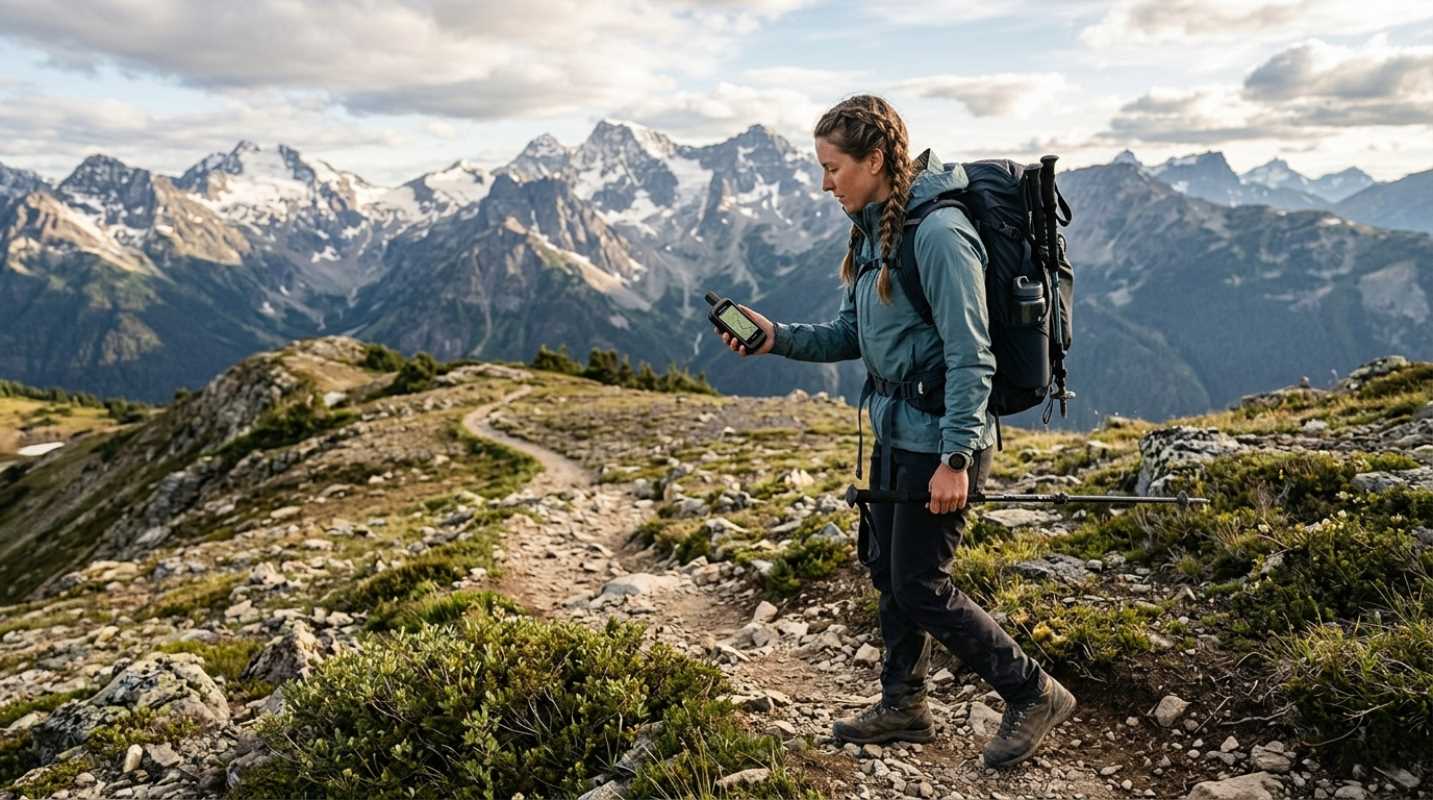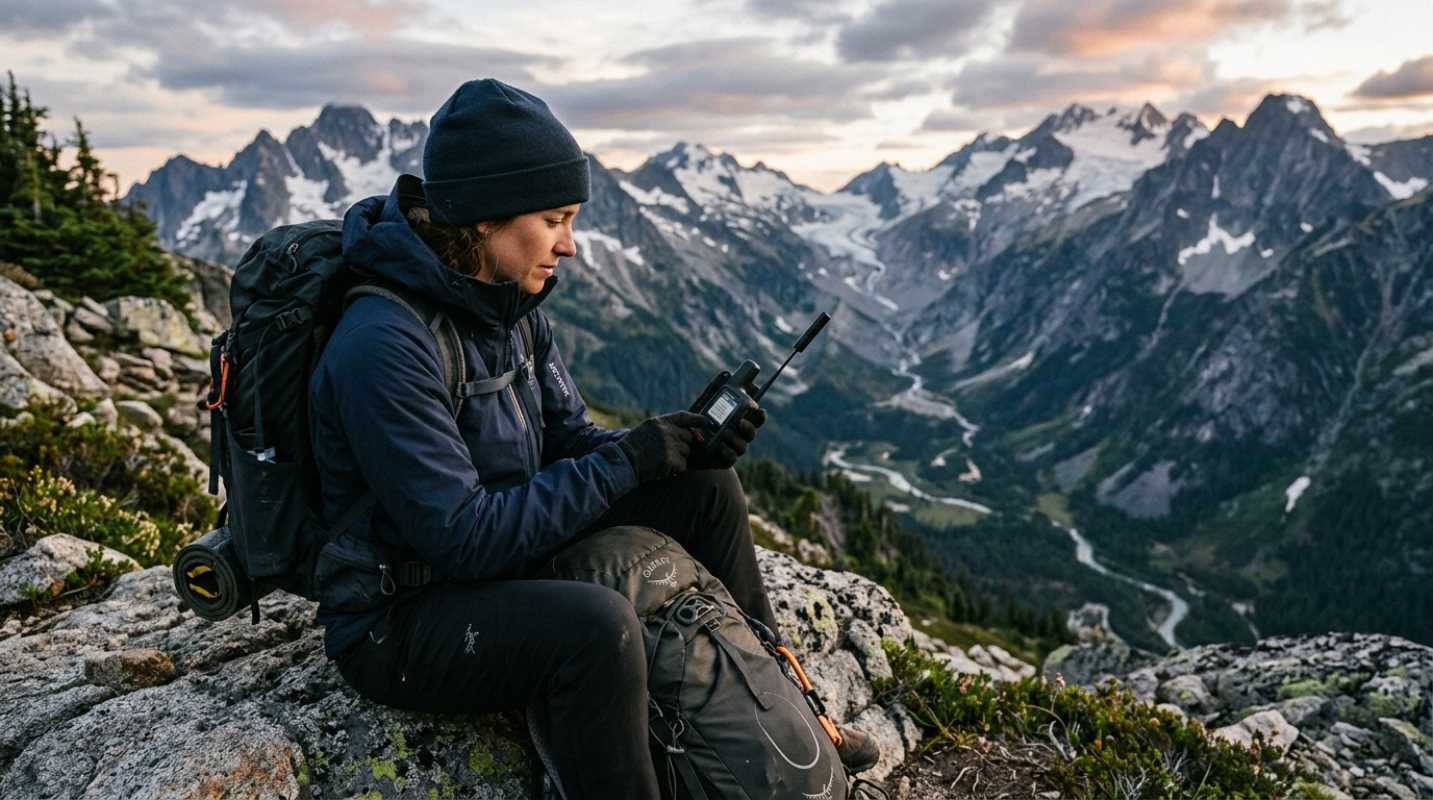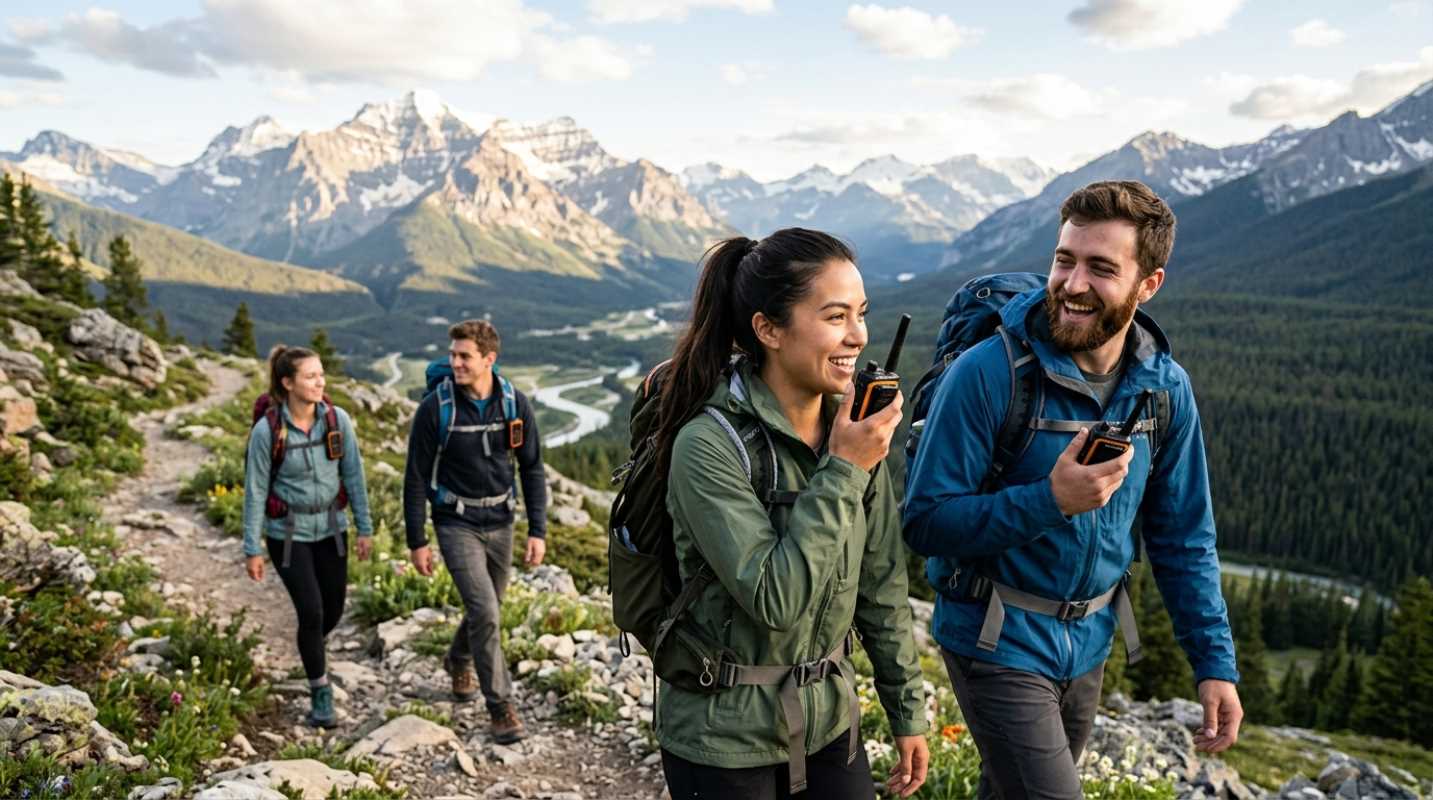
Have you ever watched your phone bars drop to zero just as you hit the trailhead? It is a classic outdoor rite of passage. Cell towers are built for highways and cities, not deep canyons, dense forests, or remote mountain passes. When you are out with a group, relying on a smartphone is a recipe for anxiety.
Group coordination needs instant contact. Knowing you can reach your partners at the push of a button brings a massive sense of relief. It is the digital equivalent of a safety rope. If someone twists an ankle, takes a wrong turn, or simply wants to share a gorgeous view, you want to know immediately. You do not want to find out three hours later when you finally notice they are missing.
Knowing you can instantly reach your partner who is half a mile ahead on a steep switchback changes the whole vibe of a trip. It replaces the nagging worry of whether they took the wrong fork with a peaceful focus on your surroundings. That psychological safety lets everyone move at their own pace without feeling abandoned.
But do not make the mistake of grabbing those cheap, colorful walkie-talkies from the toy aisle. There is a massive difference between toy-grade gear and professional-grade radios. Toy radios suffer from terrible battery life, fragile plastic casings, and weak transmitters that fail the moment a few trees get in the way. Professional-grade radios are built to survive drops on granite, heavy rain, and days of constant use in the backcountry.
Needed Features to Look For
Before you buy, you need to understand the two main types of radio frequencies.
• FRS (Family Radio Service): This is the license-free option. These radios are capped at 2 watts of power, making them perfect for casual hikes or keeping track of kids around a campsite.
• GMRS (General Mobile Radio Service): These are the heavy hitters. They allow up to 5 watts of power for handheld units, which means they push through trees and hills much better. They can also connect to repeaters to extend your range. The catch is that you need an FCC license, which currently costs 35 dollars for 10 years and covers your entire immediate family.
The GMRS license process is surprisingly painless. You do not have to take an exam or memorize radio codes. You just fill out a form on the FCC website, pay the fee, and you are legal for a decade.
Battery life is another key factor for multi-day trips. Look for radios that charge via USB-C so you can keep them alive with a portable power bank. Some models offer AA battery backups, which are fantastic lifesavers when you are miles away from an outlet.
Then there is weatherproofing, measured by Ingress Protection (IP) ratings. An IP56 rating means the radio can handle heavy rain and splashes, but you cannot submerge it. If you want something truly waterproof, look for an IP67 rating. This means the radio can survive being submerged in a meter of water for 30 minutes.
Let us talk about the biggest myth in outdoor gear: advertised range. Have you seen those packages claiming 35 miles of range? Do not believe them. Those tests are done in perfect, flat desert conditions with zero obstructions. In the real world, a 2-watt FRS radio usually gets you 0.5 to 2 miles, while a 5-watt GMRS radio gets you 1.5 to 5 miles. Trees, hills, and rocks eat radio signals for breakfast.
Top Picks for Walkie Talkie Reviews
Let us break down the best options on the market right now.
• Rocky Talkie Mountain Radio: This is the best overall choice for casual hikers and climbers. It is a 2-watt FRS radio, but it is built like a tank with a shatterproof LED screen and an integrated carabiner.¹ It weighs only 4.8 ounces and has a rechargeable battery that lasts up to 5 days. Just note that it is only IP56 splashproof, not fully submersible.
• Rocky Talkie 5-Watt Expedition Radio: If you need serious power, this GMRS unit is a top-tier choice.² It is fully waterproof with an IP67 rating and transmits significantly farther through heavy obstructions than standard 2-watt models. It is more expensive and requires that FCC license, but the performance in deep backcountry is unmatched.
• Midland GXT1000VP4: This is a legendary GMRS workhorse sold in affordable pairs. In a real-world emergency test during a December 2025 ice storm in Michigan, these radios served as a community lifeline when cell towers failed, successfully communicating over 4 miles through dense, ice-covered forests.³ It has a dual-power option, letting you use the rechargeable pack or four AA batteries.
• Midland GXT67 Pro: This is Midland flagship 5-watt GMRS radio for advanced users.⁵ It features an IP67 waterproof design and supports GMRS repeater channels. In real-world testing, users achieved clear transmissions over 15 miles by using local repeaters.⁵ It is heavy and expensive, but it offers incredible range.
• BCA BC Link 2.0: This is the gold standard for backcountry skiing and winter sports. It has a unique two-piece design where the base unit stays warm inside your backpack while a glove-friendly smart mic clips to your shoulder strap.⁴ This keeps the battery from dying in the freezing cold and lets you communicate without taking off your pack.
• Motorola Talkabout T600 H2O: If your adventures involve kayaking, rafting, or canoeing, this is your best bet. It is an FRS radio with an IP67 waterproof rating, and it actually floats face-up. If you drop it in the water at night, a water-activated LED flashlight turns on automatically so you can find it.
Mastering Radio Etiquette and Operations
Buying the gear is only half the battle. If your group does not know how to use them, those expensive radios are just extra weight.
First, you need to understand sub-channels, often called privacy codes. These do not make your conversation private. Instead, they filter out other people's chatter so you only hear your group. If you are on channel 4 with privacy code 12, your radio stays quiet until someone transmits on that exact combination.
Keep your communication short and sweet. Remember, only one person can talk at a time. State who you are calling first, then identify yourself. Like, say "Sarah, this is Mike." Wait a second after pressing the button before you start speaking, or the radio will cut off your first few words.
Finally, establish emergency protocols. Make sure everyone knows how to find the local emergency channel and how to read their GPS coordinates to rescuers. If things go wrong, a calm, trained voice on the radio is your best tool.
Final Verdict on Staying Connected on the Trail
Choosing the right radio comes down to where you play and how you travel. If you are a casual hiker or climber who stays relatively close together, a rugged FRS unit like the Rocky Talkie Mountain Radio is perfect. For deep backcountry expeditions, overlanding, or winter sports, upgrading to a 5-watt GMRS unit or a specialized winter radio is absolutely worth the investment.
Never head out on a big trip with brand-new radios still in the box. Test them in your neighborhood first. Make sure everyone knows how to change channels, lock the buttons so they do not accidentally switch frequencies in a pocket, and check the battery levels.
With the right gear and a little preparation, you can head into the wild with total confidence. You will stay connected, keep your group safe, and focus on enjoying the adventure.
Sources:
1. OutdoorGearLab Best Walkie Talkies Review
https://www.outdoorgearlab.com/topics/camping-and-hiking/best-walkie-talkies
2. GearJunkie Best Walkie Talkies
https://gearjunkie.com/technology/best-walkie-talkies
3. Outdoor Life Walkie Talkie Testing
https://www.outdoorlife.com/gear/testing-walkie-talkies-2025/
4. Backcountry Access BC Link Radio Review
https://www.backcountryskiingcanada.com/Backcountry-Access-BC-Links-Radio-Review
5. GearJunkie Midland GXT67 Pro Radio Review
https://gearjunkie.com/technology/midland-gtx67-pro-radio-review